
- March 19, 2026
- By Auto Repair Shop Fraser 48026
- In Engine
- 2
- 0
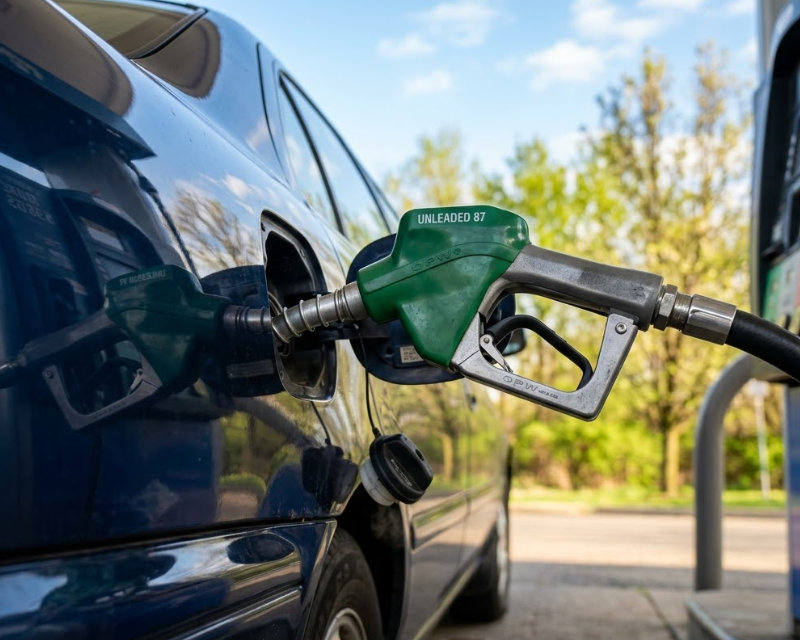
Gas prices have a way of making every driver more aware of what’s happening under the hood. If you’ve noticed your fuel economy slipping over the winter — more frequent fill-ups, a drop in your miles-per-gallon reading, or an engine that just doesn’t feel as responsive as it once did — there’s a good chance your fuel injection system is overdue for some attention.
A fuel injection service is one of the most effective and often underappreciated spring tune-up services available. At Car Guys Auto Center in Fraser, it’s a service we recommend to drivers whose vehicles have been through a Michigan winter — because cold-weather driving conditions are particularly hard on fuel delivery systems in ways that most people don’t realize. Understanding how your fuel injection system works, why it gets dirty, and what a proper cleaning can do for your engine is the first step toward getting more miles per gallon from every pump.
Modern vehicles use a fuel injection system to precisely control the delivery of fuel into the engine’s combustion chambers. Unlike the carbureted engines of previous generations, which mixed air and fuel in a relatively crude way, fuel injection systems are extraordinarily precise. The engine control module (ECM) — your car’s onboard computer — constantly monitors dozens of inputs: engine temperature, throttle position, air flow, oxygen content in the exhaust, and more. Based on all that data, the fuel injectors know exactly how much fuel to spray and when.
The injectors themselves are small, high-precision valves that open and close thousands of times per minute, spraying a fine mist of atomized fuel into the intake ports or directly into the combustion chamber (depending on the injection system type). That fine mist is critical — the more completely fuel is atomized, the more efficiently it burns, and the more power and fuel economy you get from every drop.
When those injectors are clean and operating correctly, the system works beautifully. But over time, deposits build up. And when they do, everything downstream suffers.
Fuel injector deposits are a natural byproduct of combustion. Gasoline contains hydrocarbons, additives, and detergents, and as fuel passes through the injectors and combustion occurs, residue accumulates on the injector tips, inside the injector passages, on intake valves, and in the combustion chamber itself. Over time, this residue hardens into carbon deposits.
Several factors influence how quickly deposits build up:
Fuel quality: Lower-quality gasoline with fewer detergent additives tends to leave more deposits. Top Tier-certified fuels are formulated with higher detergent levels to combat this.
Short trips: If your daily driving consists largely of short trips — a common pattern in Michigan winters when people avoid unnecessary outings — your engine never fully reaches operating temperature. Cold or partially warmed engines produce more incomplete combustion, which accelerates deposit formation.
Infrequent driving: Fuel that sits in injectors and fuel lines for extended periods degrades and can leave varnish-like deposits that partially block injector passages.
Higher ethanol content: Winter fuel blends often contain higher ethanol concentrations, which can be harder on fuel system components and leave different types of residue than summer blends.
Engine age and mileage: Older engines or high-mileage vehicles have had more time to accumulate deposits, and their components may be more susceptible to the effects of buildup.
The result of all this buildup is injectors that no longer spray fuel in the precise, finely atomized pattern for which they were designed. Instead, they dribble, spray unevenly, or partially restrict fuel flow — and your engine’s efficiency drops accordingly.
When fuel injectors are partially clogged or coated with deposits, a chain of performance problems follows:
Incomplete atomization: When injectors can’t spray a fine mist, fuel droplets are larger. Larger droplets don’t combust as completely, meaning some fuel passes through the engine unburned — literally wasting the fuel you’re paying for.
Incorrect fuel-air ratio: The ECM calculates fuel delivery under the assumption that the injectors are functioning properly. When they’re not flowing correctly, the actual fuel-air mixture entering the combustion chamber doesn’t match what the computer expects. This leads to running rich (too much fuel) or lean (too little fuel), neither of which is ideal for efficiency or engine longevity.
Increased fuel consumption: The ECM, sensing that combustion isn’t happening correctly (via the oxygen sensor in the exhaust), may compensate by adding more fuel. This protects the engine but burns more gas.
Power loss: Incomplete combustion means less energy is released per combustion cycle. You may notice the engine feels sluggish, hesitates under acceleration, or lacks the responsiveness it once had.
Rough idle and misfires: Injectors that are badly clogged may cause individual cylinders to run poorly, leading to a rough or unsteady idle and, in more severe cases, actual engine misfires — which can trigger the check engine light and cause catalytic converter damage over time.
How do you know if your fuel injection system is the culprit behind your vehicle’s performance issues? Here are the most common signs:
Decreased fuel economy: If you’re filling up more often than you used to for the same amount of driving, fouled injectors are a likely contributor.
Rough or unsteady idle: An engine that shakes, surges, or sounds uneven at a stoplight may have injectors that aren’t delivering fuel consistently.
Hard starting, especially in cold weather: Clogged injectors struggle to deliver enough fuel for a cold start, when engines need a richer mixture to fire reliably.
Hesitation or stumbling under acceleration: If your engine pauses or stutters when you press the accelerator, inconsistent fuel delivery is a prime suspect.
Loss of power at highway speeds: Injectors that can’t flow adequate fuel under high-load conditions will cause the engine to feel flat or unresponsive at speed.
Check engine light: Multiple fault codes — particularly those related to fuel trim, misfires, or O2 sensor readings — can be traced back to injector problems.
Failed or borderline emissions test: Incomplete combustion from dirty injectors produces higher hydrocarbon and carbon monoxide emissions, which can cause an emissions test failure.
If you’re experiencing one or more of these symptoms, a fuel injection service should be high on your spring maintenance list. But even if things seem fine, Michigan’s winter driving conditions make a spring inspection a smart preventive measure.
A professional fuel injection service at Car Guys Auto Center goes well beyond simply adding a bottle of fuel system cleaner to your gas tank. While those over-the-counter additives have some value as a maintenance step, they’re not a substitute for a proper professional service when your injectors are significantly fouled.
Here’s what our fuel injection service involves:
Professional-grade injector cleaning: We use commercial-grade cleaning solutions and equipment to flush carbon deposits and varnish from injector tips and passages, restoring proper spray pattern and flow rate.
Throttle body cleaning: The throttle body controls airflow into the engine, and carbon buildup on the throttle plate and bore can disrupt the air-fuel mixture, causing rough idling. We clean the throttle body as part of the service.
Intake system treatment: Deposits on intake valves — a particularly common problem on direct-injection engines — reduce airflow and combustion efficiency. An intake cleaning treatment helps break down these deposits.
Fuel system pressure testing: We check fuel pressure to confirm the fuel pump and pressure regulator are operating within spec, ensuring your injectors are receiving an adequate fuel supply.
Fuel filter inspection: A clogged or dirty fuel filter starves injectors of flow and puts extra stress on the fuel pump. We check the filter condition and recommend replacement if needed.
Post-service inspection and road test: After the service, we verify that the vehicle is running properly, check for any fault codes, and confirm that idle quality and throttle response have improved.
Drivers who get a fuel injection service often notice an immediate improvement in how their vehicle feels. The idle smooths out, throttle response becomes crisper, and the engine pulls more cleanly under acceleration. The fuel economy improvements, while they take a tank or two to fully measure, are real and meaningful.
Studies and real-world data suggest that fouled fuel injectors can reduce fuel economy by 5% to 15% or more, depending on the severity of the fouling. For a driver putting 15,000 miles per year on a vehicle that gets 25 mpg, that’s 600 gallons of fuel per year. A 10% efficiency loss equals 60 gallons, which, at current prices, could easily amount to $200 or more wasted annually. A fuel injection service costs a fraction of that, and the benefits extend well beyond just fuel savings to include reduced emissions, better engine protection, and restored performance.
For maximum spring tune-up impact, consider pairing your fuel injection service with a few complementary services that work together to optimize your engine’s efficiency:
Oil and filter change: Fresh oil is the foundation of engine health. If you haven’t changed your oil since before winter, or if you’re due, do it now. Clean oil reduces friction and supports the efficiency gains from a clean fuel system.
Air filter inspection and replacement: A dirty or clogged air filter restricts airflow into the engine, forcing a richer fuel mixture and hurting fuel economy. It’s one of the cheapest and highest-impact maintenance items you can address.
Tire pressure check and rotation: Underinflated tires increase rolling resistance and hurt fuel economy. Spring is also a great time for a tire rotation to ensure even wear across all four tires.
Spark plug inspection: Worn spark plugs cause misfires and incomplete combustion, compounding the problems of dirty injectors. If your plugs are near or past their service interval, spring is a great time to address them.
When these services are performed together, the cumulative impact on fuel economy and engine performance can be substantial — and they set your vehicle up for an efficient, reliable spring and summer driving season.
At Car Guys Auto Center, we’ve built our reputation in the Fraser area on a simple philosophy: honest work at fair prices, with options that let customers make the right decision for their situation and budget. Owner Robert Newman has been saying it for years — he’s not in the business of selling services you don’t need. When we recommend a fuel injection service, it’s because your vehicle will genuinely benefit from it.
Our certified technicians use professional-grade equipment and commercial-quality cleaning solutions — not the watered-down alternatives you’ll find at quick-lube chains. We work on all makes and models, foreign and domestic, and most of our services are backed by a 12-month/12,000-mile warranty. When you leave Car Guys, you leave knowing the job was done right.
Spring is here, and your engine deserves a fresh start after everything Michigan winter put it through. Let our team take a look at your fuel injection system and get your vehicle performing at its best — for better MPG, better performance, and better peace of mind all season long.
📞 Call us today at (586) 285-4444 or visit us at 32639 Groesbeck Hwy, Fraser, MI 48026. Schedule online anytime at www.carguysautocenter.com. We look forward to keeping you safely on the road.


