
- March 4, 2026
- By Auto Repair Shop Fraser 48026
- In Brakes
- 1
- 0
Of all the systems on your vehicle, your brakes are the one you simply cannot afford to neglect. They are, quite literally, the difference between stopping safely and not stopping at all. And after a long Michigan winter — full of hard stops on icy roads, relentless road salt, and temperature swings that stress every component on your car — spring is the ideal time to make sure your braking system is in top shape.
At Car Guys Auto Center in Fraser, brake inspections are one of the most requested services we see every spring. Drivers who have been white-knuckling through slippery intersections for months want to know their brakes are ready for the warmer, busier driving season ahead. And what we find during those inspections makes it very clear: Michigan winters are genuinely hard on braking systems in ways most drivers don’t fully appreciate.
Before we get into the damage winter can cause, it helps to understand what your braking system is made up of. When you press the brake pedal, you’re activating a hydraulic system that pushes brake fluid through lines and hoses to calipers at each wheel. Those calipers squeeze brake pads against a spinning rotor (disc), creating friction that slows and stops the wheel. It sounds simple, but the system has many components — pads, rotors, calipers, brake lines, brake fluid, wheel cylinders (on drum brake systems), and the master cylinder — all of which need to be in good condition for your brakes to work properly.
Most modern vehicles also have an anti-lock braking system (ABS), which uses sensors and a control module to prevent wheel lockup during hard braking. If any component of the ABS system is compromised, your ability to brake safely in emergency situations is reduced — even if the brakes themselves feel normal during everyday driving.
Michigan winters put braking systems under stress from multiple angles. Here’s what’s been working against your brakes since the first snowfall:
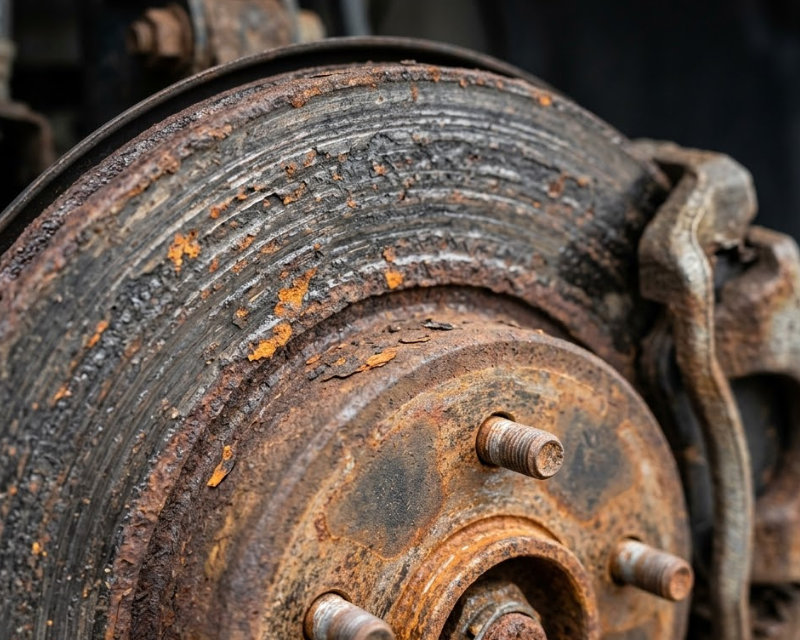
Road salt and corrosion: Road salt is highly corrosive to metal, and brake components — rotors, calipers, brake lines — are made of metal. Over the course of a winter, salt exposure causes surface rust on rotors, which can progress to pitting that compromises the rotor’s smooth braking surface. Brake lines are particularly vulnerable; small rust perforations can cause fluid leaks that dramatically reduce braking performance. Caliper corrosion can cause them to stick, leading to uneven braking and premature pad wear.
Temperature extremes: Brake components expand in heat and contract in cold. Michigan winters bring dramatic temperature swings — sometimes 40 or 50 degrees in a single day during the thaw periods. This repeated expansion and contraction stresses brake hardware, accelerates wear on rubber components like brake hoses and seals, and can cause rotors to develop minor warping over time.
Hard emergency stops on ice: Even if ABS prevents your wheels from locking, hard brake applications on ice and snow put significant stress on your pads and rotors. The heat generated during aggressive braking, followed by rapid cooling in cold winter air, is particularly hard on rotors and can contribute to warping.
Extended periods of non-use: If your vehicle sat for extended periods during storms or extreme cold, surface rust can develop on rotors. This is usually normal and wears off quickly — but in more severe cases or on vehicles with existing corrosion, it can compromise the braking surface.
Brake dust and salt combining: The combination of brake dust (a byproduct of normal pad wear) and road salt creates a corrosive mixture that can work its way into brake components and accelerate deterioration of seals, caliper slides, and rotor surfaces.
Your brakes communicate with you — through sound, feel, and sometimes smell. Here are the warning signs that mean you need a brake inspection immediately, not eventually:
Squealing or squeaking when braking: Many brake pads have built-in wear indicators — small metal tabs that contact the rotor when pads get thin and create a high-pitched squeal. If you hear this, your pads are telling you they’re near the end of their life.
Grinding noise: Grinding is more serious than squealing. It usually means your brake pads have worn completely through, and the metal is contacting the rotor. This damages rotors quickly and needs immediate attention.
Pulling to one side when braking: If your vehicle veers left or right when you apply the brakes, a caliper may be sticking, or a brake pad may be worn unevenly on one side. This is a safety issue.
Brake pedal vibration or pulsing: A pedal that pulses up and down under your foot during braking is a classic sign of warped rotors — a common result of the heat cycling and temperature stress of winter driving.
Soft, spongy, or low brake pedal: If the pedal feels mushy or sinks closer to the floor than usual before the brakes engage, you may have air in the brake lines or a brake fluid leak — both of which require immediate attention.
Burning smell after driving: A sharp chemical or burning smell after normal driving can indicate a sticking caliper, keeping the brake pad in constant contact with the rotor. Ignore this, and you risk brake failure.
Brake warning light illuminated: Don’t ignore it. It could indicate low brake fluid, a sensor issue, or a system fault that needs diagnosis.
Here’s the important caveat: waiting for these symptoms before getting a brake inspection is reactive, not proactive. Many brake problems develop gradually, and by the time you notice something is wrong, you may already have damage that’s more expensive to repair than if it had been caught earlier. A spring inspection catches those issues before they become urgent.
One aspect of brake maintenance that often gets overlooked is the brake fluid itself. Brake fluid is hygroscopic — meaning it absorbs moisture from the air over time. As the moisture content in brake fluid increases, its boiling point drops. During hard braking, heat is transferred into the fluid. If that fluid has a low boiling point due to moisture absorption, it can actually vaporize, creating air bubbles in the brake lines. Air doesn’t compress the way fluid does, which means your braking power drops — sometimes dramatically.
In addition to performance concerns, moisture-laden brake fluid accelerates corrosion inside brake lines, calipers, and the master cylinder. Most manufacturers recommend brake fluid service every two years or so, but many drivers go much longer without ever thinking about it. If you can’t remember the last time your brake fluid was checked or replaced, spring is a good time to have it tested.
When you bring your vehicle to Car Guys Auto Center for a brake inspection, our certified technicians perform a comprehensive evaluation of your entire braking system. Here’s what we check:
Brake pad thickness on all four wheels — and wear pattern analysis
Rotor condition: surface finish, thickness (measured against minimum specs), scoring, pitting, and warping
Caliper condition and operation — checking for sticking, leaks, and even pad contact
Brake fluid level and moisture content testing
Brake lines and hoses — inspecting for corrosion, cracks, bulging, or leaks
ABS sensors and system function
Parking/emergency brake adjustment and operation
We won’t just tell you what we found — we’ll show you. At Car Guys, transparency is a core part of how we do business. Owner Robert Newman has built his reputation on honesty and giving customers real options. We’ll walk you through what your vehicle needs, explain why, and give you clear pricing before any work begins. We offer OEM, aftermarket, and in some cases, rebuilt parts to give you flexibility on cost without compromising safety.
Most brake services at Car Guys are backed by our 12-month/12,000-mile warranty, so you can drive with confidence knowing the work is guaranteed.
Spring is when driving picks up. Kids’ activities resume, weekend road trips start, and Michigan roads get busier. The last thing you want heading into a busy driving season is a brake system that’s been quietly deteriorating over winter and hasn’t been checked.
Think about the moments when your brakes truly matter: a child running into the street, a car stopping suddenly on the highway, a deer crossing at dusk. In those moments, you need every bit of stopping power your vehicle has. A brake system that’s been compromised by a winter of salt, cold, and hard stops may not deliver that.
A spring brake inspection is quick, affordable, and gives you peace of mind that your vehicle’s most important safety system is ready for whatever the road throws at you. It’s one of the smartest investments you can make for yourself, your passengers, and everyone else sharing the road with you.
Don’t wait until you hear grinding or feel a spongy pedal to think about your brakes. Let the certified technicians at Car Guys Auto Center give your braking system a thorough spring inspection. We serve drivers throughout Fraser, Mt. Clemens, Clinton Township, and all of Macomb County — and we’ll give you an honest, no-pressure assessment of exactly what your vehicle needs.
📞 Call us today at (586) 285-4444 or visit us at 32639 Groesbeck Hwy, Fraser, MI 48026. Schedule online anytime at www.carguysautocenter.com. We look forward to keeping you safely on the road.


